Health and Safety Policy — House Clearance Addiscombe
 Overview: This Health and Safety Policy sets out the commitment of our house clearance and rubbish removal operation to protect the health and safety of staff, clients and the public while delivering professional clearance services. Our approach applies to all house clearance, waste clearance and junk removal activities carried out on client premises or in public spaces. The policy reflects a risk-based culture that emphasises prevention, safe systems of work and continuous improvement.
We recognise that effective health and safety management underpins high-quality clearance services. Responsibilities are clearly allocated, with managers and supervisors accountable for implementing controls and operatives expected to follow procedures. Our policy covers manual handling, hazardous materials, sharps and asbestos awareness, vehicle operations, use of powered tools, and the safe loading and transportation of waste and bulky items.
 Scope and application: This policy applies to all employees, subcontractors and temporary staff delivering house clearance Addiscombe services and related rubbish collection duties. It also informs clients and stakeholders about our operational standards. Key objectives include:
- Preventing injury and ill-health through hazard identification and control.
- Ensuring lawful and responsible waste removal consistent with environmental protection.
- Maintaining competence through training, supervision and documented safe work procedures.
- Providing suitable personal protective equipment (PPE) and enforcing its use.
Risk assessment and safe systems of work are central. Prior to any clearance, a written or documented site assessment must be completed to identify trip hazards, unstable structures, contaminated items and access constraints. For larger clearance projects, a method statement will be prepared, describing the sequence of operations, exclusion zones and emergency contingencies. Our operatives are trained to escalate hazards that require specialist disposal, such as chemical waste or suspected asbestos, to competent authorities.
Training, competence and supervision
We ensure that all team members receive role-appropriate training, which includes manual handling techniques, correct lifting methods, PPE selection, and vehicle safe-load practices for rubbish removal operations. Supervisors conduct routine toolbox talks and on-the-job coaching to maintain standards. New staff and agency operatives receive induction covering the policy and emergency procedures. Competence is retained through refresher training, records of which are maintained centrally.Operational controls and equipment
To reduce risk during clearance work we require the use of mechanical aids where possible, including trolleys, sack trucks and lifting straps. Vehicles used for waste clearance are inspected daily and loaded to safe limits to prevent shifting during transit. Electrical equipment is visually checked and, where necessary, tested in line with industry practice. Sharps and hazardous items are segregated and contained in appropriate containers for safe disposal by licensed waste carriers.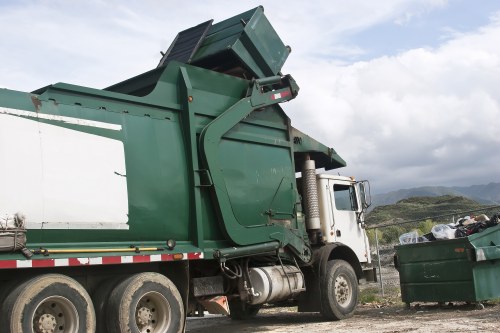 Personal protective equipment and welfare: PPE is provided to every operative and includes gloves, steel-toe footwear, high-visibility clothing, eye protection and respiratory protection when dust or contaminants are present. Welfare arrangements such as hydration, rest breaks and suitable changing/handwashing facilities are maintained to support staff wellbeing during intensive clearances.
Reporting and investigation of incidents form a critical feedback loop. All accidents, near misses and potential exposures must be reported promptly and investigated to identify root causes and corrective actions. Records of incidents and remedial measures are retained to support continual improvement in our domestic and commercial clearance operations. We communicate learnings from investigations across the team to avoid repetition.
 Monitoring, review and continual improvement: Our health and safety performance is monitored through routine inspections, audits and performance metrics. We set measurable targets for incident reduction, training completion and compliance with safe systems. This policy is reviewed at regular intervals or following significant change to operations, legislation or after a major incident. Senior management is committed to providing the resources necessary to implement this policy and to integrate safety considerations into planning for all rubbish removal and clearance services.
Stakeholder responsibilities and communication: We communicate this policy to clients and partners involved in clearance projects so that everyone understands their responsibilities in relation to site access, the segregation of waste streams and any site-specific hazards. Contractors must demonstrate equivalent standards and cooperate with our operational controls. Open communication ensures that risks are managed collaboratively and that lawful disposal channels are used for segregated recyclable materials and hazardous waste.
Legal compliance is a minimum standard: we commit to meeting applicable health and safety and environmental requirements relevant to house clearance and rubbish removal activities. While this policy does not list legislation, our legal compliance programmes encompass safe waste handling, transportation, vehicle licencing requirements and duty of care for waste. We maintain records to demonstrate that legal obligations are met and to support transparent operational oversight.
Conclusion: This Health and Safety Policy reflects our determination to provide safe, reliable and environmentally responsible clearance services. The policy is supported by documented procedures, trained personnel and a culture that encourages reporting and continuous improvement. All team members are required to read, understand and comply with the policy; managers will ensure it is implemented effectively and reviewed periodically to remain fit for purpose.